5 Beliefs That Changed My Life
There are five beliefs that changed my life. For most of them, I can point to the exact moment the change started.
This goes a layer deeper than the things I quit to simplify my life. A lot of those things I quit were grounded in a belief tied to the action itself.
Beliefs are basically the construct of our mind. We can't take any action for growth, whether that's decluttering our home or simplifying our life, until our beliefs are aligned with it.
They're like the roadways that allow you to take different actions and achieve different results.
1. Your Beliefs Create Your Reality
It's kind of meta, the belief that your beliefs create your reality. Your beliefs still aren't the same as reality, and that distinction matters.
What we believe about something changes how we respond to situations. It changes our actions, our relationships, essentially us.
The thing we believe doesn't have to be true to have an impact.
I can remember when I started understanding this concept. I was 19 years old, had gone down a bad path, and got pulled back home to sleep on my parents' couch.
I was depressed, making bad decisions, and stuck in a way of thinking I didn't like but didn't know how to change.
Then I started listening to a self-help speaker my mom had bought me on CD in her last-ditch effort to get me off the couch.
There were so many aha moments on those CDs, and one of them was about how our beliefs lay the groundwork for everything else in our lives.
Listening to it opened something up in me, but it didn't change everything overnight.
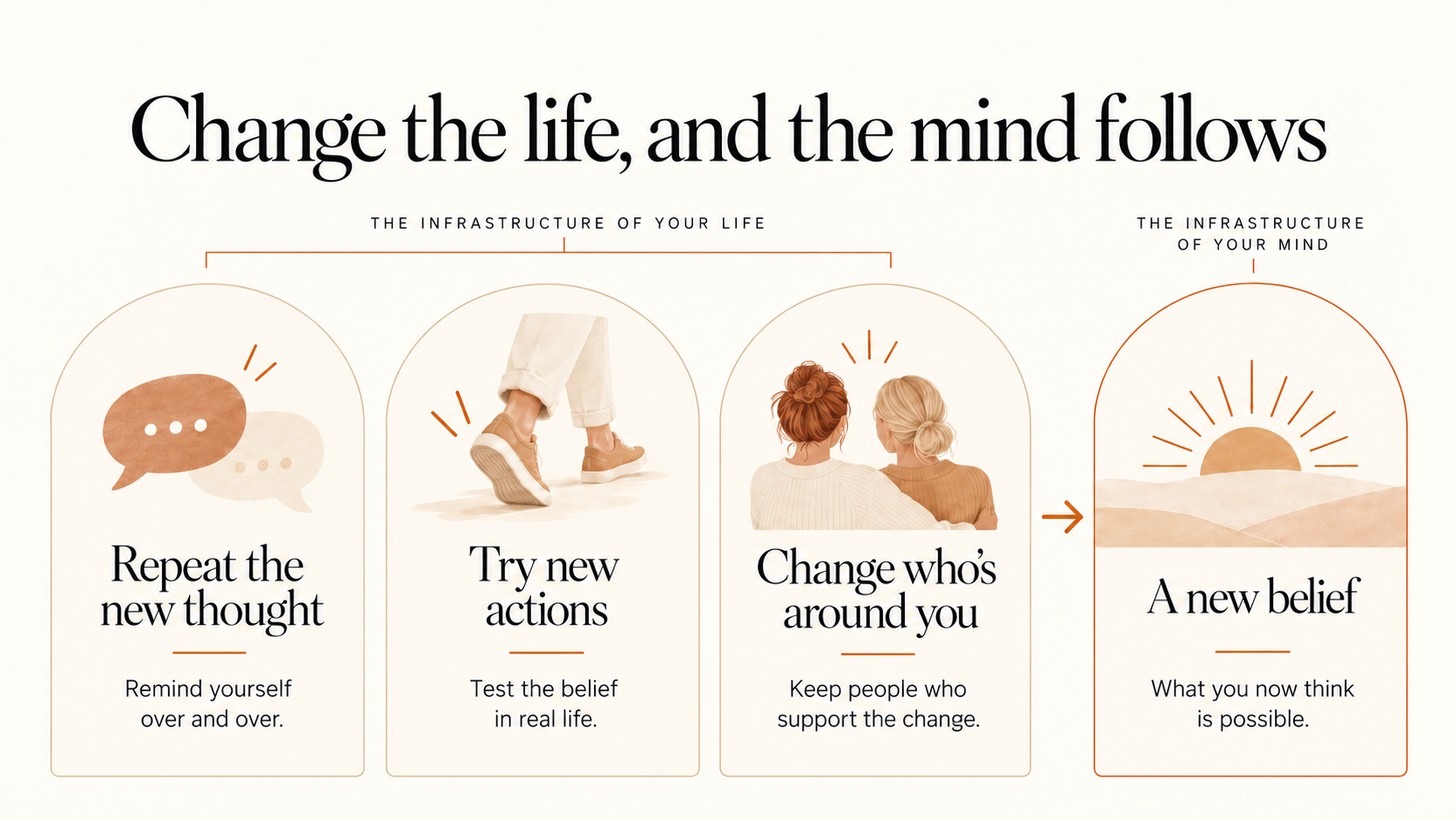
Changing your beliefs and thought patterns is a process. You have to remind yourself over and over, try different actions, and surround yourself with people who support the change.
You have to change the infrastructure of your life to change the infrastructure of your mind.
But even the inkling that I had some say in my beliefs, and that altering them would eventually alter my life, was mind-blowing to me at the time.
I've heard that same message so many times since, and it never hits like the first time.
It's why I drill this in even when we're just talking about letting go of clutter. You're not going to take that action if you believe you can't, or that it's wrong or wasteful.
Your actions will only ever align with your beliefs. So our beliefs are always creating our reality, whether they're true or not.
It's the layer underneath everything in how to simplify your home and life.
2. Your Environment Shapes Your Reality
This one I didn't pick up until much later, probably my late 20s to early 30s.
That's when I started connecting to the power our environments have over our energy, our mood, and our daily function and flow.
Our spaces can be supportive, or they can be toxic spaces that keep us lying in bed all day, surrounded by clutter.
Whatever you're surrounded by, good or bad, is shaping your reality. That's how we get things like echo chambers.
I came from a small town of about 2,600 people, where everybody had the same general core belief systems, same religion, same politics.
It wasn't until I went off to college that I understood not everybody thought like we did.
It was such a shock to go somewhere else and run into people contradicting the things I'd always known to be true.
And changing that environment reshaped my reality, because my beliefs started changing. On a small scale and a large scale, our environments are constantly reshaping our realities.
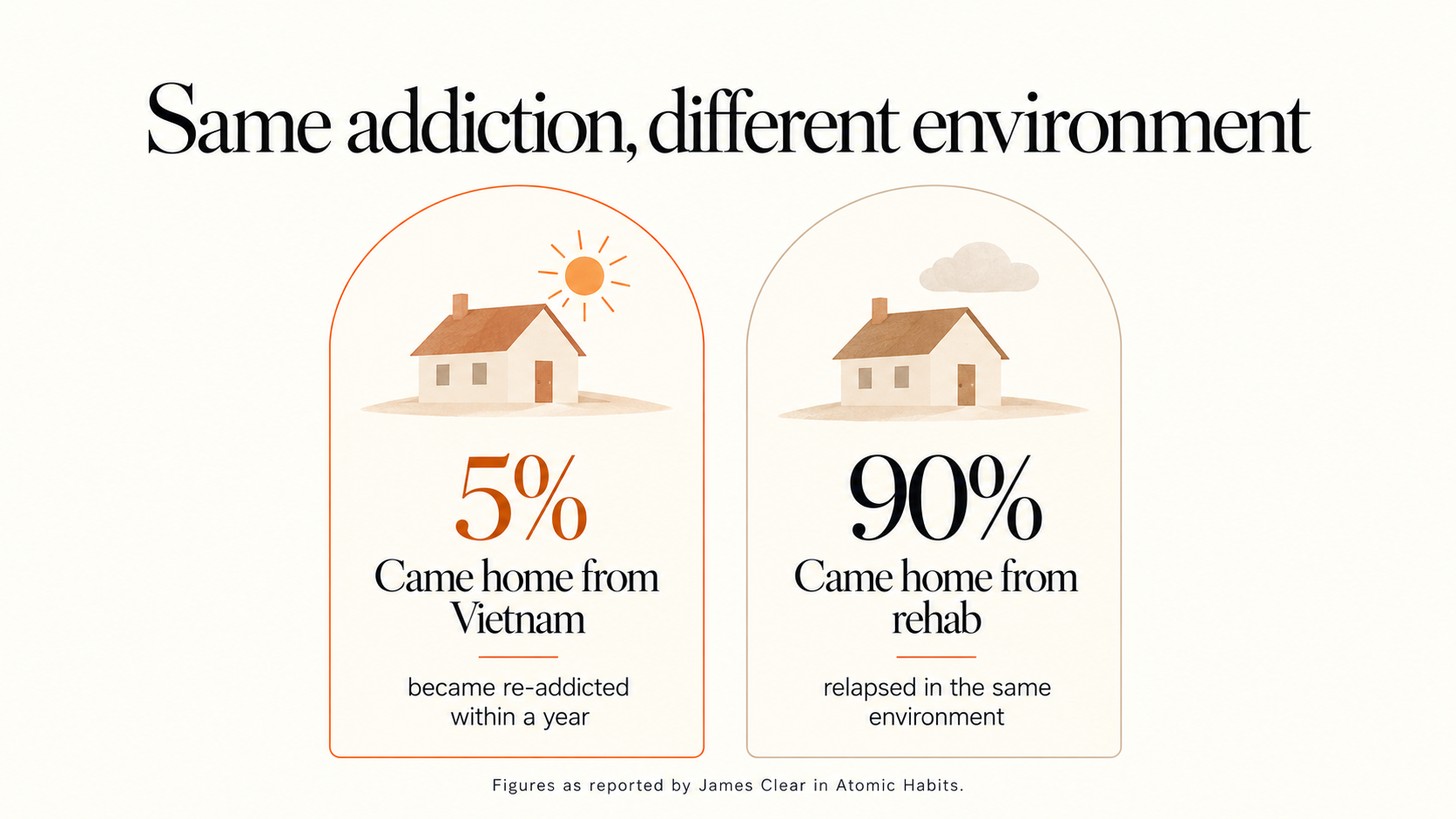
One thing that stuck with me more than almost anything else in Atomic Habits was the part about soldiers in the Vietnam War.
Heroin was prevalent over there, conditions were bad, and a lot of them came home addicted.
But once their environment changed, only 5 percent became re-addicted within a year, and just 12 percent relapsed within three years. Compare that to rehab, where James Clear writes that around 90 percent of users relapse once they go back home to the same environment.
That's a staggering difference, and it's a direct indication of how much our environments shape us.
They shape everything from our physical health to our core belief structures.
And this includes people. I've moved many times in my life, and my life changed a little every time, largely because of the humans I was surrounding myself with.
In some of the worst times of my life, I was surrounded by some of the most toxic, self-absorbed people, and they dragged me down to that level.
Pulling away from people can be even harder than changing where you live, because we all have this human need to be accepted and supported.
But your people are part of your environment too, right alongside your daily routines and your physical space.
And of course it includes the stuff you surround yourself with. We've talked a lot about environmental design and creating a space that supports the habits you want, and to me that's one of the foundational layers of a supportive environment.
The quantity of your stuff, the quality, the emotional attachments and memories tied to it, all of it is shaping your reality every single day.
It shapes whether you open your closet and immediately feel overwhelmed and want to crawl back in bed, or feel inspired and organized.
Whether you wake up to chaos from the moment your feet hit the floor, or wake up with space, mental clarity, and time to breathe.
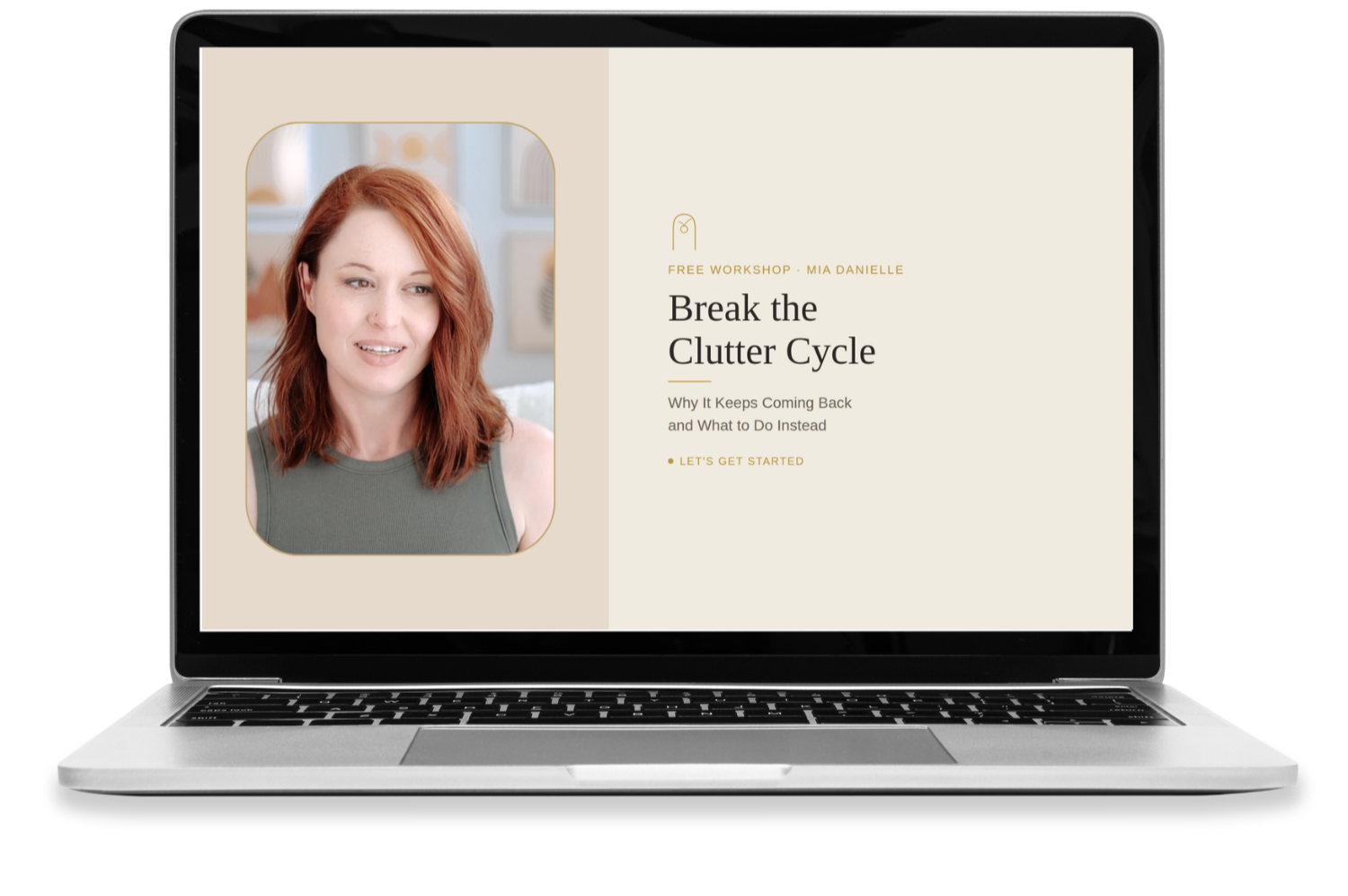
I get into all of it, the mindsets, the emotions, the physical strategies, and the habits, in my free workshop on breaking the clutter cycle.
3. Nobody Else Is Responsible for Your Happiness
This one took me many relationships to finally accept. It was a doozy.
From a very young age, I had these expectations of what a partner was supposed to be for me and do for me.
A lot of women in my family had negative or abusive relationships, and I spent a lot of time around an aunt who got obsessive with hers.
I had this perfect idea of my future husband and how many kids I was going to have, and there was no accepting less than that perfection. That was its own issue.
I just could not let go of the belief that happiness had to come from another person.
And if they weren't perfect, I wasn't happy, so guess what. I was never happy.
Then there was this young adult period where I swung to the other end of it and started believing nobody else can make you happy, so make yourself happy.
It put me in this really self-centered position of not even considering other people's emotions, and that wasn't healthy either.
It probably didn't click into place until my late 20s, when I finally felt a sense of autonomy and independence without the selfishness.
Happiness can come from making other people happy, or just from unity, everybody enjoying and appreciating the same thing at the same time.
You can't reach that kind of bliss when you're isolated and everything is about you.
But you can't reach it by constantly siphoning happiness from other people and expecting them to hand it to you, either.
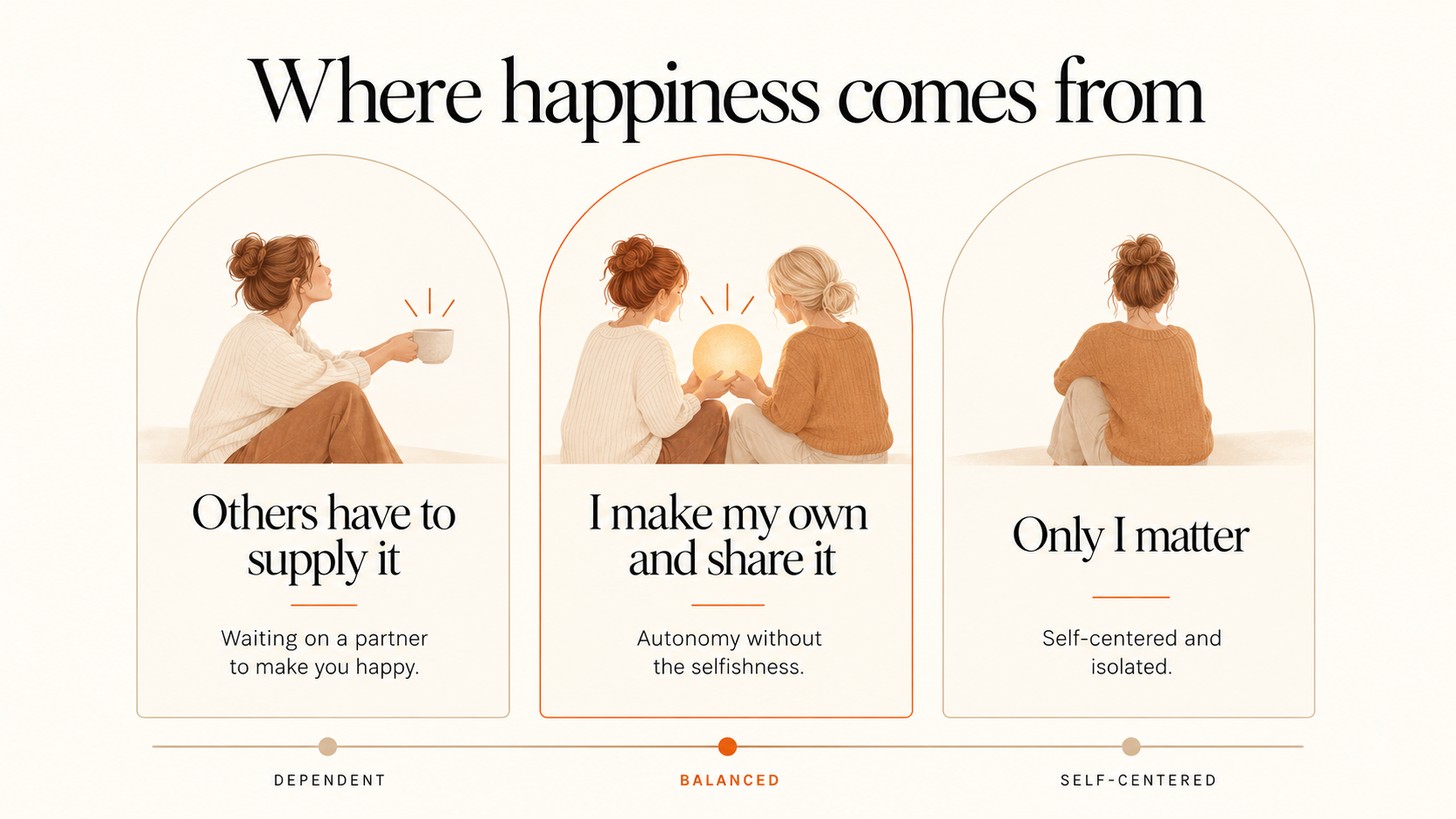
Other people can't make me happy, but I can still find joy in sharing happiness with other people.
Finding balance in that whole belief structure was life-changing. And it shows up all through the habits happy people practice every day.
4. There Is No True Black and White
Dogmatic opinions, theories, and concepts are never 100 percent right. And I've learned to be very skeptical of people with the confidence to stand up and say, this is the true way, this is the only way.
It doesn't matter if it's a public speaker, somebody on social media, a preacher, or a president. That confidence can make you feel like they must be right.
Our brains kind of like it, too, because it relieves the pressure of not knowing. We want to believe somebody out there has all the answers.
Nobody has it 100 percent correct, regardless of what you're talking about.
Zero humans on this earth have all the answers.
The same goes for this whole concept that no person is just one thing. I love watching modern movies, and if you compare them to even 20 years ago, the whole theme changes.
We need multiple layers now, some gray area, more than a villain and a hero. That's become boring.
And I think the same is true for anything. A person is never just an alcoholic or just a bad boss.
Everybody has areas where they're good and areas where they're bad. Some people have leaned into the bad areas more than others, but we all have that complexity.
Even people who've become really crappy people have their own backstory and decision tree that got them where they are now.
I used to think I needed to be right about everything.
I hated being wrong, and I would defend my point of view like a good attorney, even past the point of realizing I was probably more in the wrong than the right.
Then I spent time around other people with different perspectives and realized there may not even be a right.
And the most interesting part is that I became a much happier person when I realized I'm not the only person on earth with a mind and a life experience.
It's like this pressure valve released and all of that hot air just whooshed out of me.
5. Nothing Bad Lasts Forever
This too shall pass. Time heals all.
You hear it said all these different ways, and it's so true, but even more importantly, it's so necessary to understand.
I can pinpoint when this concept first hit me. I was 15 or 16 and had my first big breakup, my first love.
We were classically, unhealthily obsessed with each other. On the phone until two in the morning, lovey dovey, making everyone around us sick.
Then he broke up with me, and I had never felt anything like it. That depression, that rejection, that hollow emptiness.
Because I'd never felt it before, I didn't know if it was going to last forever. It felt like it would.
And I remember my mom telling me, time heals everything, it's amazing the things that time can heal. I clung onto that.
You know those mornings where you wake up and feel fine for a second, then everything comes rushing back and drags you down. That was my first experience with it, and it was not my last.
But that's the point I'm making. It did pass, and I did move on.
Today I could see that person on social media and feel nothing, zero nostalgia.
Time 100 percent healed that to completion.
That was also my first bout of depression, and it turned out not to be my last.
I ended up with an off and on relationship with depression and anxiety that I eventually had to get treated, and I think it's just a part of my genetics.
So I would always go back to that first big heartbreak and my mom telling me time was going to heal everything.
The next few times something really bad happened, I would mentally tell myself, this is going to pass.
That was so crucial. When people make terrible decisions that take them down a path they can't get out of, a lot of times I think it's because they didn't believe things were going to get better.
Time was going to do its part. I just had to do my part and let it happen.
That belief gave me a second chance over and over. With depression, with shame, with guilt, with those moments where you want to hide under a rock and never let anybody see your face again.
It always passed. It always did.
I would not be where I am today without that core belief really early on in my life.
The Beliefs Underneath Everything Else
Those five beliefs were pretty core to me becoming who I am now, being a happier person, and being able to change my life even through some really terrible situations.
And my list of life-changing beliefs is actually a hell of a lot longer.
So long that I'm thinking about an ongoing series, beliefs that changed specific parts of my life, similar to what I've done with the limiting beliefs that keep you stuck in clutter.