The First 5 Things I Decluttered When I Went Back to Minimalism
I didn't ease back into minimalism. I got frustrated enough with the amount of stuff in my home that I just started.
That's the honest version.
I've been doing this for almost a decade, so I already have the paperless system, the simplified wardrobe, the general rhythm of keeping things pared down. But a few years go by, a baby joins the picture, a teenager leaves for college, and the spaces that once felt like everything had its place start feeling heavy again.
So I followed the frustration. And here's where it led me first.
1. Personal Care Items (The Downstairs Bathroom)
This one came first because it had been bothering me the longest.
The downstairs bathroom is right next to the kitchen, attached to the dining room, in the middle of the entire morning routine. When my oldest daughter was still living at home, this was her bathroom space. When she left for college, she left behind everything she didn't want to take with her, and my stuff slowly merged with what remained.
The top drawer was a disaster. Skincare, hair care, and personal care items from two different people sharing one small space.
I did what I always do: took everything out, wiped the drawers down, and only put back what I actually wanted to keep.
For the hairdryer and straightening iron, I pulled out cloth zipper bags from our luggage storage. One for each. Four months later, I'm still using the same system because it genuinely makes them easier to use and easier to put away.
For the makeup, I kept the basics: one foundation I love, one blush, one mascara, an eyebrow pencil because my 40s demanded it, and eyeliner. Anything I didn't love got thrown out. Half-used eyeliners in the wrong color, eyeshadow palettes that weren't what I expected.
I don't consider that wasteful. I consider it consideration for the space I have left.
Anything I liked but wasn't a core staple went into my "use it up" pile. My rule with that: do I actually like it, and will I actually use it? If the answer is no, it goes.
2. The Medicine Drawer
This was the most embarrassing area by a long stretch.
The drawer right below the personal care one holds everything medical. Ibuprofen, Band-Aids, cough syrup, allergy medicine, and our dog Charlie's flea and tick medication. Because I had two ankle surgeries a couple of years back and spent half a year unable to walk, we had also accumulated wraps, ice packs, steri-strips, and gauze.
When you start holding on to more things out of necessity, it's easy to lose sight of what else has piled up underneath. We had expired medicines, dressings that needed to be consolidated, and items that had served their purpose and no longer needed to be there.
The whole thing took about an hour. One hour for one very full, very deep drawer. And being able to see everything at a glance afterward, not having to dig for anything, that's my favorite part of any decluttering project.
3. The Kitchen
The kitchen declutter snowballed in the best way.
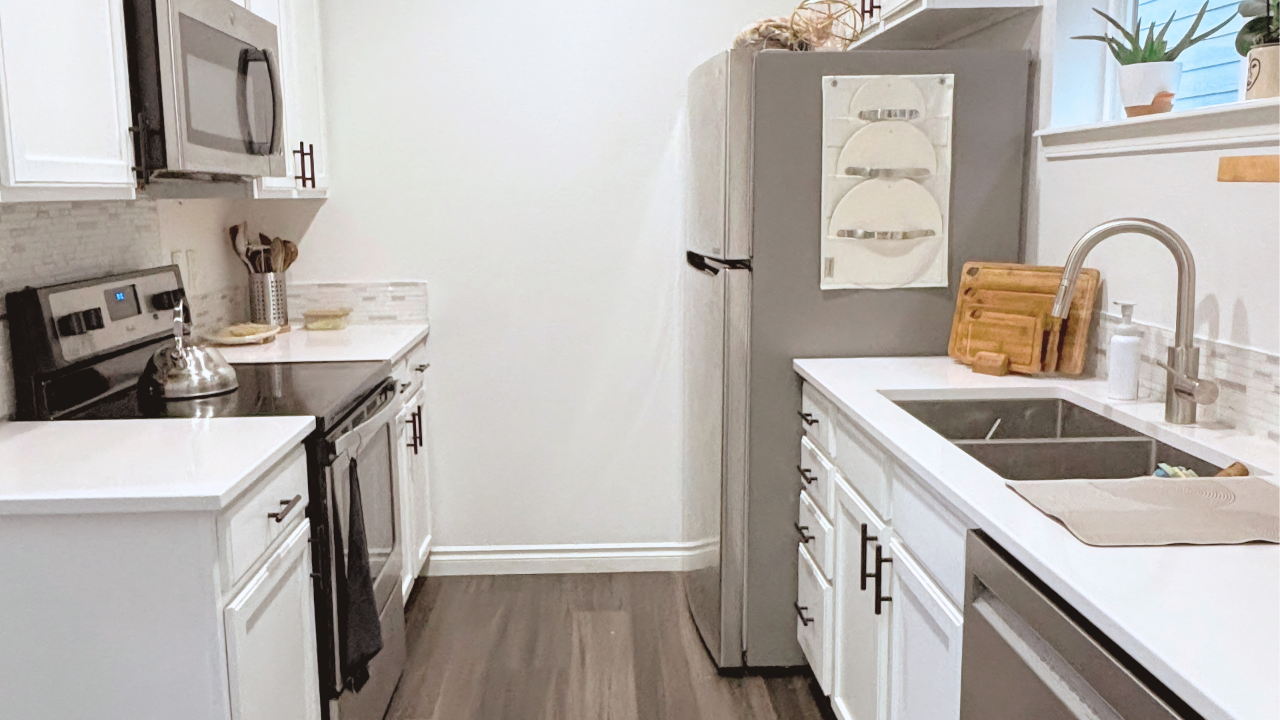
What started as a simple decluttering project turned into painting the cabinets, repainting the walls, removing an entire cabinet, and replacing it with butcher block shelves. That wasn't the plan. But I was standing in the middle of the kitchen, too many things were bothering me at once, and I just started pulling cabinet doors off.
I emptied every single cabinet and every drawer completely, wiped everything out, and only put back what I wanted to keep. That cleared out expired seasonings, condiments we weren't using, chipped dishes, and food products that had just been sitting there.
One thing we've never had a problem with: Tupperware. We keep no more than five pieces, all glass with snap-on lids. I grew up in a house with giant cabinets full of mismatched plastic containers and loose lids. That is never happening in my home.
Overall, we decluttered about two boxes worth from the kitchen. The majority of the work was creating better systems for the things already in there that were driving me a little crazy.
4. Toddler Toys and Clothes
At three years old, Chloe outgrows things fast. Developmental stages shift, interests change, and if I'm not checking in regularly, things pile up without me noticing.
The framework I use here and teach in my programs is spatial constraints. The idea: you base the amount of stuff you keep on whatever specific, defined space you're willing to allow for that category. And you revisit those constraints as life changes.
For Chloe's toys, we have a basket for her building magnets, a box for wooden tinker toys, a basket for Legos. Each category has its own container, and nothing else goes in it. That keeps things easy for her to clean up and easy for me to manage.
We cleared out almost a full bag: books she had outgrown, toys she wasn't playing with anymore, and clothes she was close to growing out of. Nothing dramatic. Just a reset to match where she actually is right now.
5. Cleaning Products (Under the Kitchen Sink)
We keep cleaning products on four small shelves under the kitchen sink. Over time, I had also started storing my deck gardening supplies down there: soil, acidifiers, seeds. It had gotten to the point where we had to dig to find anything.
Most of the gardening supplies came out. Charlie's things that we weren't using anymore came out too. The expired, the unused, the things that no longer made sense were cleared.
Right now, I'm working through a use-it-up challenge with two bottles of all-purpose spray before I go back to making my own. I love vinegar-based solutions with essential oils and lemon, but I'm not adding to the space while I still have things to finish. Once those bottles are gone, I'll get back to the homemade versions.
Even with those bottles still in there, the space is so much better. Everything is visible. Everything has a place.
I Followed The Frustration
I didn't tackle these areas because they were on some master list. I followed the frustration. I went where the mess was making my daily life harder, and I started there.
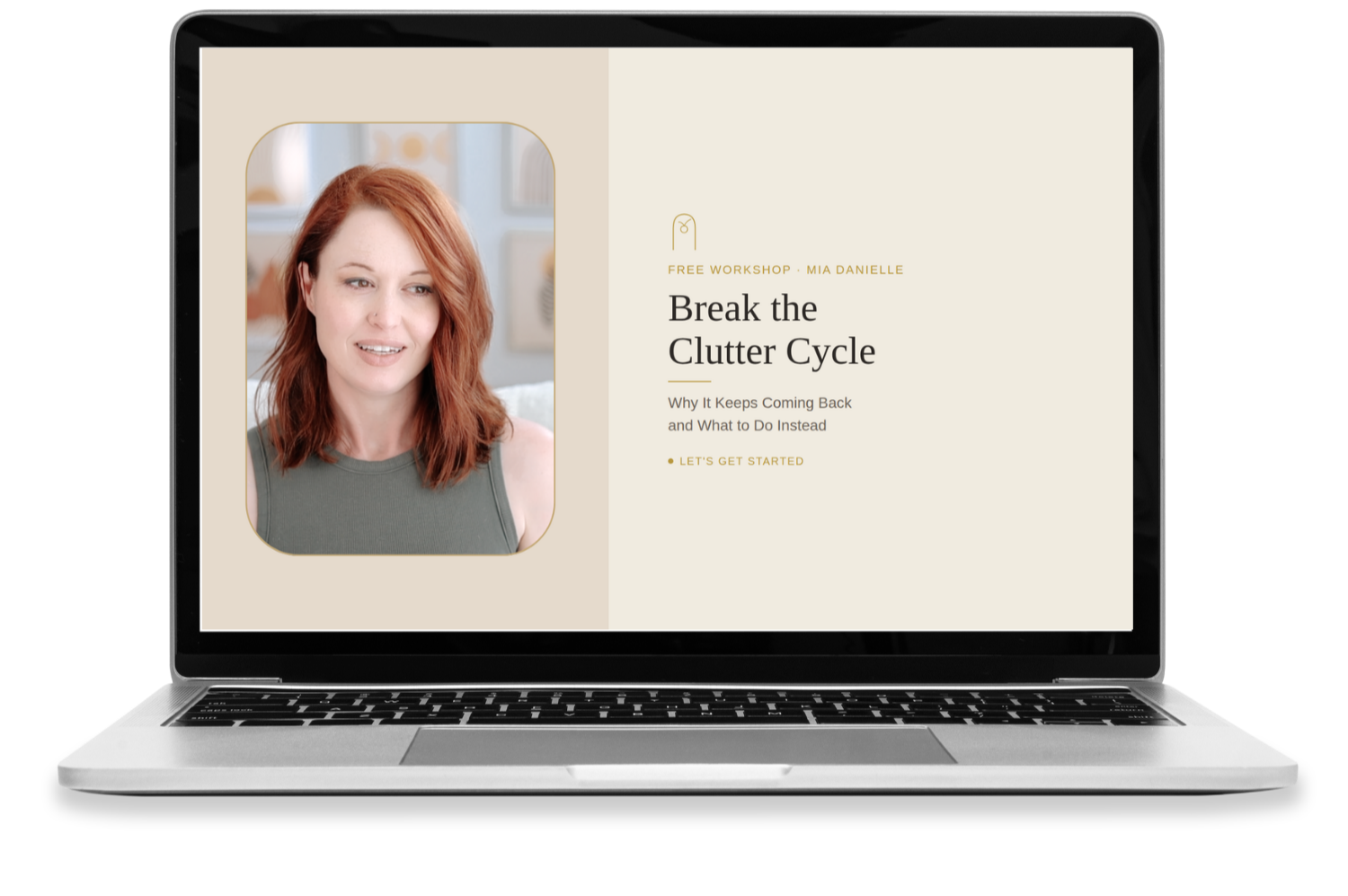
That's the approach I always come back to, and it's one of the core ideas inside Break the Clutter Cycle. If you feel like you don't know where to begin, you don't need a perfect plan. You need a starting point that actually bothers you enough to move.
Start there.
Ready to break the cycle for good? Check out Break the Clutter Cycle.