What Minimalism Actually Is (And Isn't)
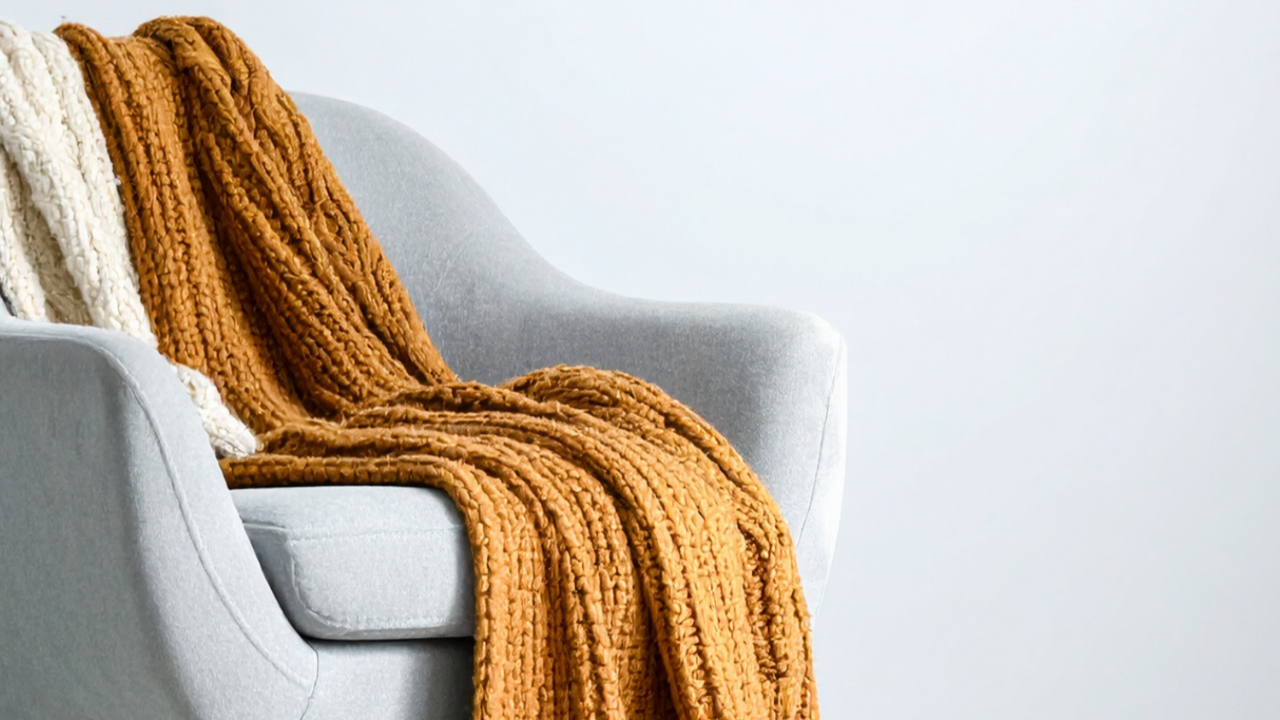
Minimalism has a branding problem.
When most people hear the word, they picture strictly empty surfaces, blank walls, a thriving desert plant on an otherwise bare shelf, and someone who clearly doesn't have kids or a coffee habit.
And, trust me, I'm here for it, I love that design style, too!
But it really isn't about that. And although minimalism isn't the trend it was a few years ago, I've found that everything that made it matter to me is still just as true.
Maybe even more so.
The economy is especially hard, and consumption has only increased. It's a thing.
So let's talk about what a realistic version actually is, who it's for, what it gives you, and what it has nothing to do with, the way I actually practice it.
Consider this the wide view. Every concept here links to a deeper dive, so when something hits home, the full story is one click away.
What Minimalism Actually Means
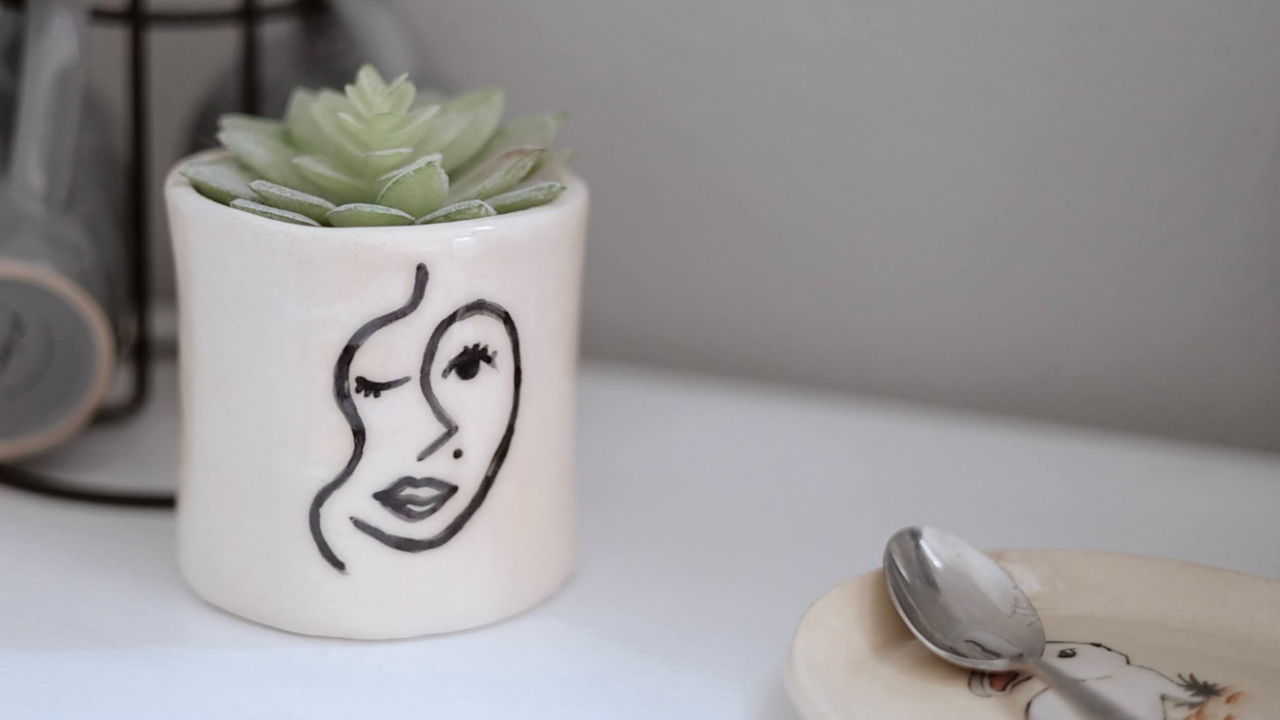
My own definition, which I've had for years, is simple: minimalism is a practice of awareness and intention regarding your belongings, time, and energy.
That's the lens I look at all of it through. There's no item count, no required color palette, no wardrobe style you have to adopt to "qualify."
I still own two televisions, a full board game collection, six coffee mugs, and a waffle maker that does exactly one thing.
I am, by any objective measure, not a stark white room person. I have two white rooms in my entire home, and I'm completely fine with that.
The level I personally practice is what I'd call practical minimalism, clutter-free, but built for a family of five, including a toddler plus our dog, Charlie.
The goal isn't to have the least or to win some imaginary competition of having the least of something. It's to create a space that is optimized for support and functionality and to protect my time and energy.
What It Isn't
I once read about a guy on Reddit who loved gaming, had a Zelda tattoo, and wore graphic tees that announced exactly who he was to the world.
He decided to "go minimalist," stripped everything down to black, white, and gray, and got so deep into the aesthetic that he stopped feeling comfortable putting up a picture of his own family.
He felt lost. Like he'd erased himself.
Minimalism isn't about replacing your identity with a new one. It's about keeping the things that are actually, authentically you, and releasing the rest.
One of the keys to minimalism for me was that the house looks nicer and cleaner without me having to put a bunch of work into it.
There's this misconception that being a minimalist means you must be a neat freak, like the house needs cleaning because your minimalist friend is coming over. The two really have nothing to do with each other.
You can absolutely be a messy minimalist. Minimalism calls you to discard excess, not to bleach the counters or organize things into color-coded bins.
I want less stuff because it makes me feel better and makes my space more soothing. That's why I keep choosing it.
It isn't perfectionism in disguise, either. Minimalism and perfectionism get confused constantly, but they produce opposite effects. Perfectionism breeds chronic guilt and health problems and is one of the leading causes of procrastination and lost productivity.
When I think of perfectionism, I think of something that tunnel visions and sucks away your energy and attention. Minimalism is built to simplify and prioritize, so you have more energy and attention for whatever you actually want to spend it on.
Myths That Keep People Stuck

There are a few myths that come up constantly when I talk to people about this. The biggest ones:
"I can't be a minimalist because I can't get rid of X." Or "I'll need to get down to the 'right' number of things". It's the fear that it's going to make you get rid of the things you love. But the question of when you have enough is personal and shifts as your life does.
There are no rules about what you have to let go of. It really is all about you and what works for your life.
"I'm too messy/disorganized to be a minimalist." People who aren't naturally organized actually have a leg up here. Their instinct is to get rid of things, not to find prettier bins to store them in.
"It only works if everyone in my house is on board." This one is the biggest hurdle because it really does feel true.
I'm one person in a family of five, and I don't go through decluttering my husband's stuff. I've still been able to make a huge impact on our home just with the things I can control.
Nobody is in control of your wardrobe but you. Same for your bathroom products or your coffee mug collection, and the difference from just your own stuff is huge.
Why This Became a Thing
Minimalism as a lifestyle didn't come out of nowhere. The word itself was coined by the arts, describing music and visual art that stripped away everything but the essential.
Music was actually the first, artists making music with just the bare essentials.
For me, it's the same kind of exploration in my own space. I stretch myself in one area, let go in another, and play with that push and pull of balance and enoughness.
It's mentally and physically engaging, and I reap the benefits in a more serene, tranquil space, which I personally thrive in.
But the lifestyle movement? That's a direct response to the world we live in. I actually spent years researching this history back in 2017 when almost nothing existed on the topic, and that post became one of my most-read pieces ever.
The short version: with the Industrial Revolution came mass production, which led to overproduction, which led to marketing, which led to a consumer culture that tells us constantly that more equals better.
The Industrial Revolution did for stuff what the internet did for information, blasting it out faster than any one brain can keep up with.
And that problem hasn't gotten better. With the internet and now AI, new materials and products get conceptualized exponentially faster.
Studies point to something called the hedonic treadmill, the tendency to keep drifting back toward your own happiness baseline after a high, no matter what set it off. A new thing lifts you for a bit, then you settle right back to where you started.
That's just how our brains process rewards. You can't hold a constant state of reward, it always has to come back down to baseline.
Today’s Prime delivery only makes you happy until it’s out of the box and in use. Then we’re on to being irritated that tomorrow’s delivery is running late.
One thing I noticed through the whole rise and fall is that minimalism started off being for everybody, even leaning toward lower incomes. By the end of the trend, it had worked its way up the ladder instead of down, showing up in magazines and high-end media.
I should say, my own path here wasn't glamorous. When I first started practicing minimalism, I was the kind of broke who seriously considered switching to rice-and-beans dinners to save money.
We never actually made the switch, I don't think, but it was on the table because there was no extra disposable income.
I got comments back then about how convenient it must be that "being poor is trendy now." Years later, once things had turned around financially, I started getting the opposite accusation, that minimalism is only for rich, privileged people.
Neither is true. Clutter is universal, and this lifestyle is for anyone at any income, especially if you make it about the right things and make savvy choices to get there.
I wrote a full response to the idea that minimalism is only for rich people if you want the longer version.
Minimalism had its viral moment, and that wave has crested. But what made minimalism so popular in the first place, people worn out, fatigued, and broke from the consumption cycle, hasn't gone anywhere.
That's exactly why a realistic version outlasts the trend.
What It Actually Gives You
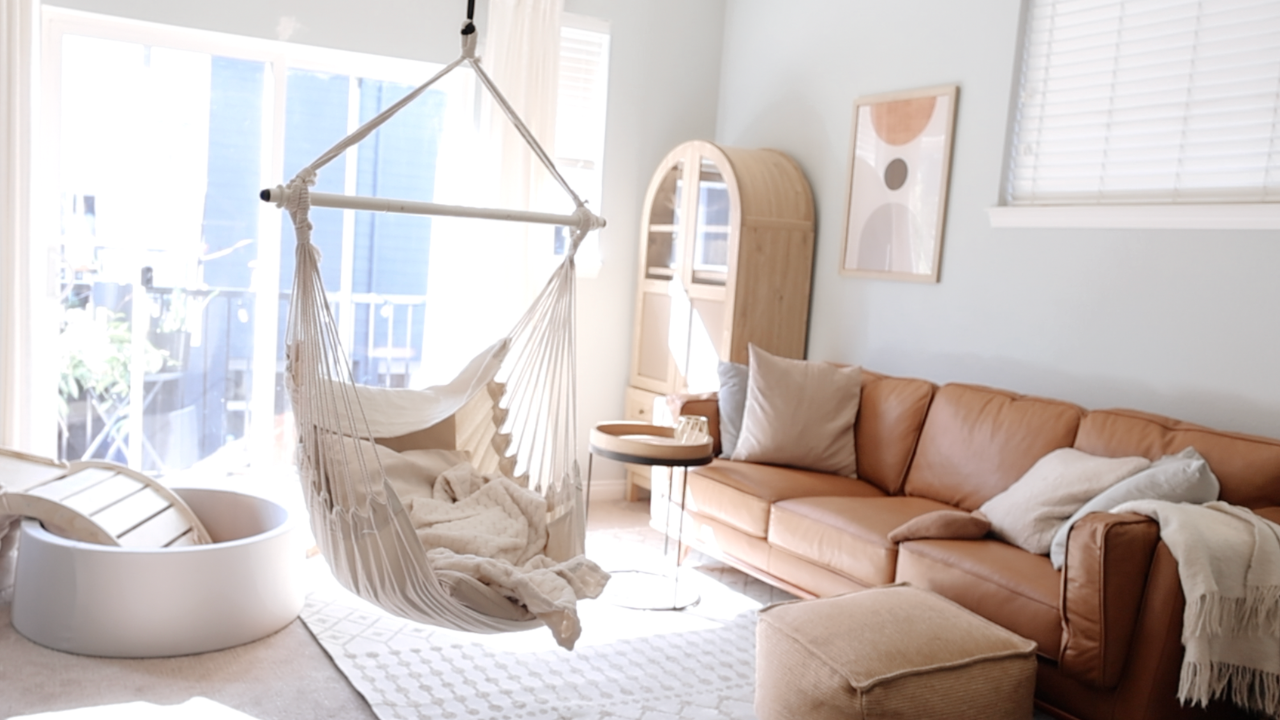
Your environment is one of the most impactful things you can shape to support your own happiness.
That's not a small claim, but in my experience, it's accurate.
The benefits of minimalism run longer than I can cover here.
The financial ones are real. You buy less, keep less, and spend less, you're not rebuying duplicates you can't find, and you can even sell what you no longer use.
But the ones people underestimate are the internal ones.
Mental clarity. The ability to just be present, without yet another thing pulling on your attention span or sitting on your plate waiting to be taken care of.
When your visual field isn't competing for your brain's resources, your focus improves without effort. It changes the way you feel and the way you think.
Reclaimed time. Less stuff means less cleaning, less searching, less maintaining.
That time doesn't disappear. It just becomes yours again.
A built-in support system. When life gets hard, a simpler home doesn't pile on. It gives you space to rest and recover without everything falling apart while you do.
The payoff also looks different depending on who you are. I'm a pretty hardcore introvert, which I know surprises people.
Public, extroverted things drain me fast. It's part of why I only open enrollment for my course once or twice a year.
Introverts especially need a clear space to retreat to and regenerate, and a cluttered one just adds another drain right when you have the least energy to deal with it.
There's also a special kind of freedom in the process of letting go itself. The reducing feels relieving all on its own, almost cathartic.
Getting those resources back, time, energy, and mental capacity, is the whole reason I simplify my home and life the way I do.
Why I Actually Became a Minimalist
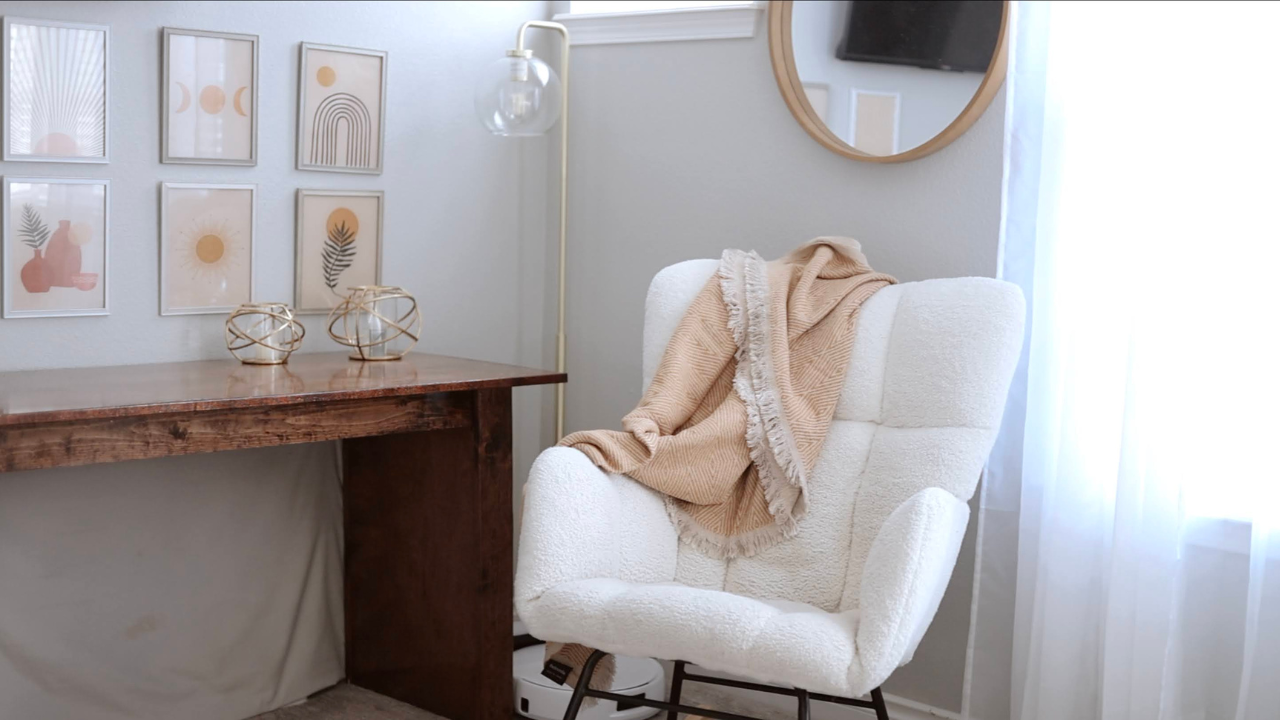
I didn't come to minimalism because I wanted a pretty home or because it was trending. I came to it during one of the worst depressive episodes I'd ever had, years ago.
I was looking externally for anything that might make me feel better, and I started researching environments. The idea that the space around you could actively support your mental state, rather than add to the load, changed the direction of my life.
A lot of what I found was research on the psychological effects of clutter, and it holds up better than most people realize.
I've dealt with anxiety and depression since I was sixteen. Back then, I'd turn bright red in social situations and could barely hold a conversation with new people without my whole face betraying me. A cluttered, chaotic home was one more thing working against me.
There's a lot of confusion, maybe even misinformation, out there on this. There are real psychological, physical, and emotional benefits in letting go and creating space for yourself, and none of them are a cure.
It might help. It might help enough. It might not.
What minimalism gave me wasn't a cure. It was a support structure. A home that didn't fall apart on the days I needed to check out and rest.
When I came back, I wasn't buried under what had accumulated while I was recovering. That's what minimalism and mental health actually look like in practice, not a fix, but a foundation.
The emotional rollercoaster I used to live on flattened out considerably. I can't even remember the last time I had any kind of episode. It's been years.
I attribute a meaningful part of that to creating a home environment that supports me instead of draining me.
Adapting Is Easier Than You Think
You can't really talk about the foundation of minimalism without talking about adapting, because it's a huge part of why people either try this out or don't.
One of the most common fears I hear: "I could never live with less. I'm too attached to my things."
Here's something most people don't realize: adapting to living with less happens much faster than you expect.
On a family camping trip a few years ago, we each had one cup, one plate, one spoon for the whole week. By day two, it was just normal.
The kids didn't miss their toys. Matt didn't miss his video games. I missed my memory foam mattress a little.
We're hardwired to adapt. What you worry will feel like pain or deprivation before you start often feels just fine, or even like relief, once you're on the other side.
The key is starting with awareness, not willpower. The number one key to actually living a minimalist life is building awareness about what you own and why you're holding onto it, not forcing yourself to let go of things you're not ready to release.
Forcing it is what causes those knee-jerk reactions of wanting everything back. A gentle practice of awareness, understanding what you have and why you have it, taking baby steps, lets the adaptation happen on its own.
That same awareness is what keeps a home clear long after the first big clear-out. Clutter creeping back almost always traces to two things: what you believe about your stuff and the daily habits around it, and staying clutter-free for good is mostly about shifting those two instead of relying on willpower.
Curating Instead of Collecting
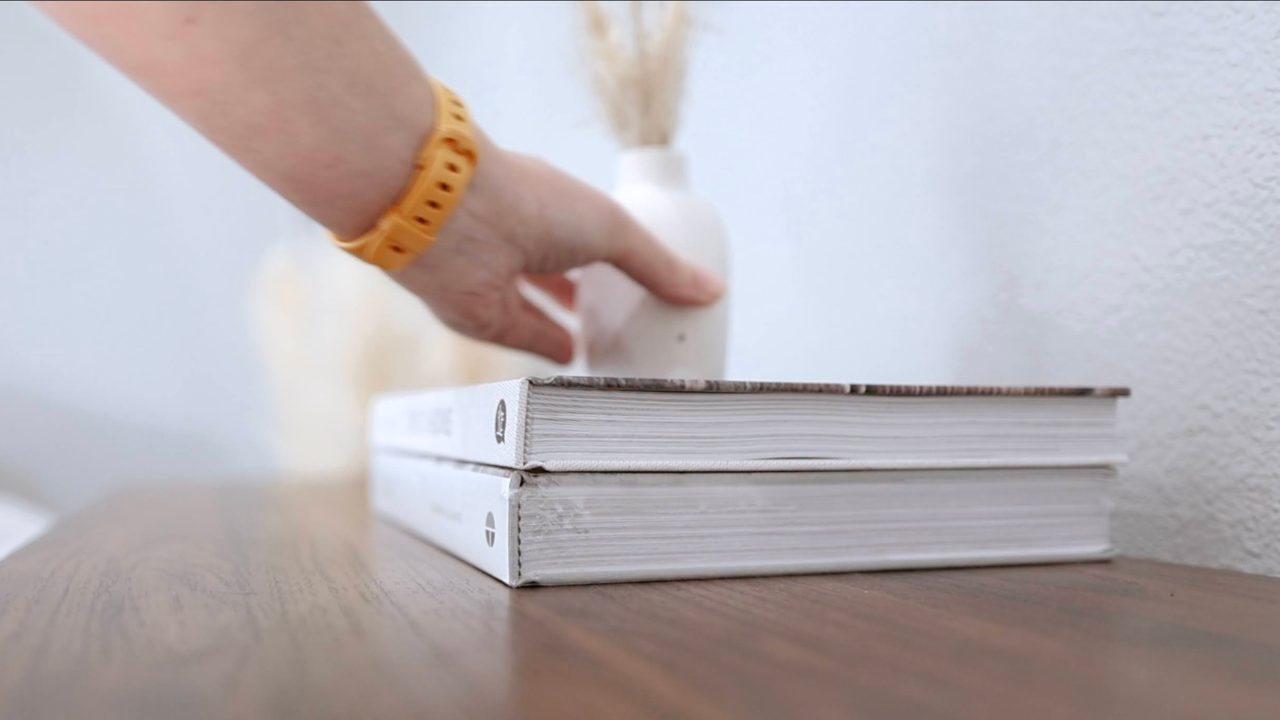
Once you start moving in this direction, the real shift isn't about getting rid of things. It's about becoming a curator instead of a collector.
Think about the difference between two kids on Halloween. One comes home with the bigger bag, but it's full of penny candy and things they don't want. The other has fewer pieces, but every single one is a Snickers or a full-size KitKat.
Fewer total, but better across the board. That's what curating instead of collecting actually looks like, and it applies to everything from your wardrobe to your kitchen to your skincare routine.
Stick with what works. Let go of what doesn't. Stop replacing things that aren't broken because something newer caught your eye.
This is where it shows up most in real life. My own closet went from overstuffed to a wardrobe I actually wear, fewer pieces, all of them things I reach for.
It extends past clothes, too. There are plenty of things I now own only one of, and owning one good version beats owning five mediocre ones I have to choose between every day.
Minimalism With Kids and Family
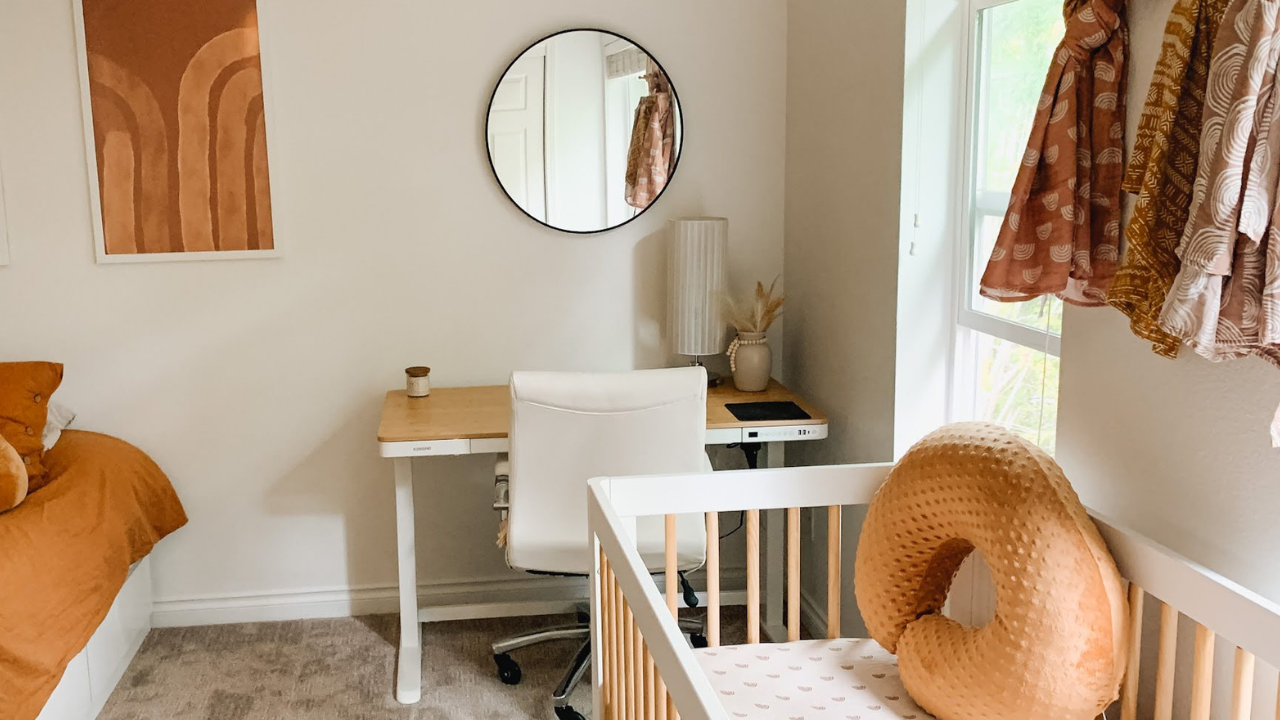
The most common objection I get is some version of "that sounds nice, but I have kids."
I have three. Including a toddler that I'm doing this all over again with. So I want to push back on that.
Minimalism benefits kids in real, research-backed ways. Fewer toys build better decision-making skills because they actually have to choose. It develops responsibility because a manageable number of belongings is something a child can actually be in charge of.
If I let my toddler go wild, pull out every toy she owns, and then ask her to clean up her mess, she can't do it. She'll circle the room and come back asking for help, because at three and a half she can't take in that much stuff and decide where to start.
But if she's just played with her tinker toys and there's a box they live in, "pick up your tinker toys and put them in the box" is a clear instruction she understands. One thing to focus on, one thing to manage.
It builds gratitude because when gifts are occasional rather than constant, each one lands differently. And it reduces the behavior problems that research links directly to chaotic, cluttered environments.
That's the other extreme end of the spectrum. The middle is where you find the balance that works for your family.
My (now middle) child went through a serious collector phase, rocks and sticks from every walk, more stuffed animals than I could count. The solution that always worked was spatial constraints.
You get this box. Whatever fits is yours. When the box is full, something has to come out for something new to go in.
It helped with autonomy, since everything had one place to go. It helped the decision-making muscle, because once things overflowed, a decision had to be made. And it made everything easier to clean up.
I love using spatial constraints for anything possible.
That one practice raised two kids who now voluntarily bag up their own things for donation runs. The third is still too young, so that's TBD.
If you're navigating the kids-and-minimalism balance and have specific questions, I've answered a lot of them directly here.
Experiences Over Things (Most of the Time)
There's a version of minimalist thinking that says experiences are always better than things, and things are always clutter. I don't fully buy that.
Research does show that our satisfaction with experiences increases over time while our satisfaction with material things diminishes. Memories don't collect dust or take up closet space.
And the math is real: if you spend an average of $30 a week on non-essential impulse buys, that's $1,560 a year, roughly the cost of a round-trip flight to Thailand.
But things are also experiences. My robotic vacuum is a thing, but it's also daily returned time I use for things I actually care about. That's experiential value.
The real question isn't experiences vs. things. It's whether what you're spending on, time, money, attention, is giving you anything real back.
Hold your belongings to the same standard you'd hold a planned experience. If it doesn't clear that bar, maybe it's clutter.
Getting Started
If you're new to all of this, the best starting point isn't a giant decluttering session. There are three steps I recommend for anyone beginning this process.
The first one is identifying your actual why, the personal reason this matters to you.
Everybody who jumped on during the trend and fell off the second it stopped trending was probably in it for the wrong reason. Reasons like that never last.
A why that's really yours is what carries you through the rough moments, when emotions come up or you're just physically tired. It's the gasoline that pushes you through the process.
Decluttering is the physical phase of minimalism. The awareness and intention come first, and decluttering is where that awareness actually reaches your shelves and drawers.
It's a necessary step to achieving a minimalist space, period. And of course, getting started with decluttering comes with its own set of obstacles and know-how.
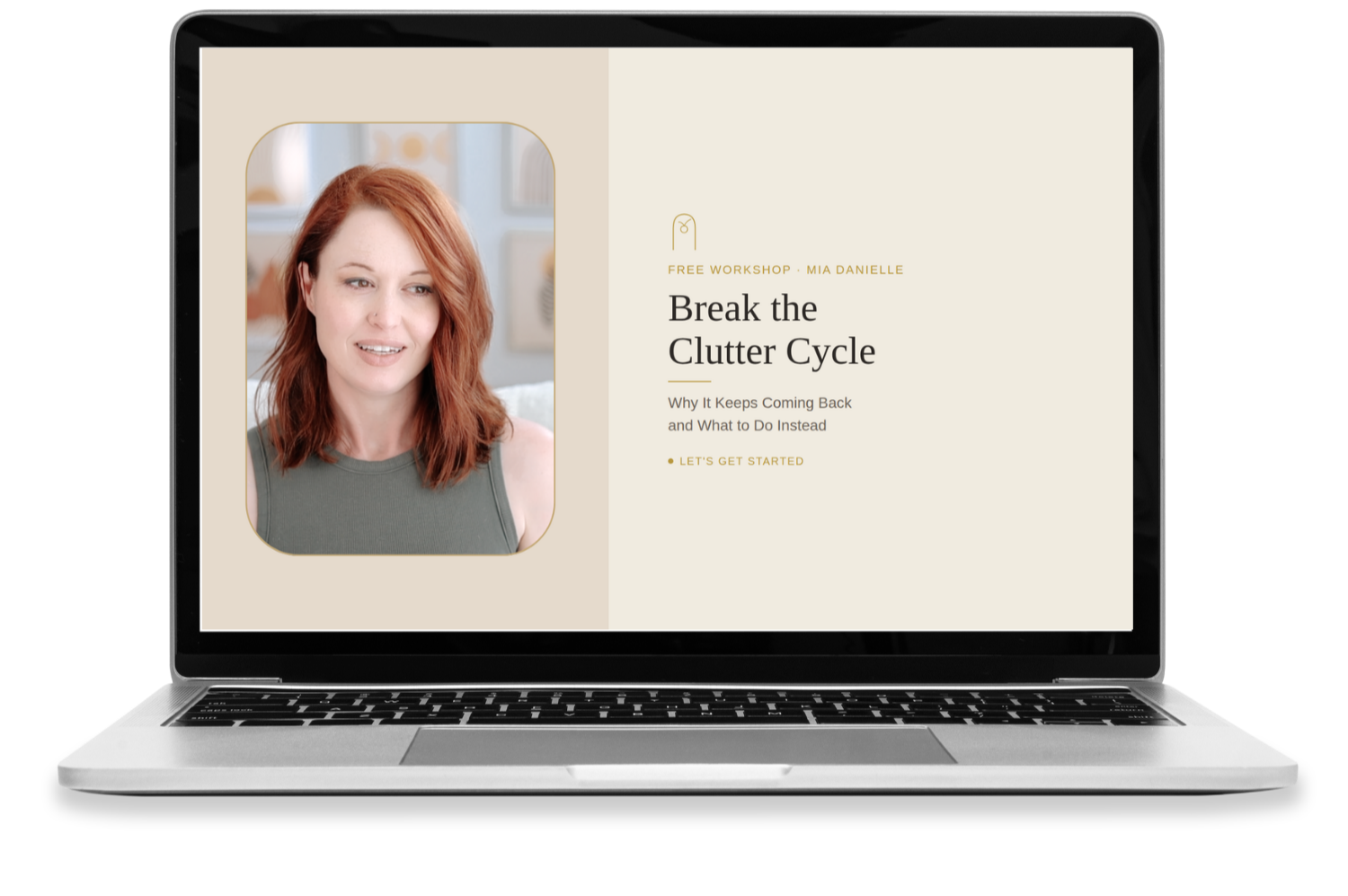
And if you want the shortcut, my free workshop walks you through a full holistic process, breaking down the five ingredients you need for a clutter-free home that actually lasts.
The Bottom Line
Minimalism isn't a uniform, a rule set, or a competition to own the least.
It's a practice of paying attention to what you own, what you value, how you spend your time, and what's actually worth your energy.
When you get that right, the decluttering, the habits, the systems, all of it becomes a lot easier to sustain. Because it's coming from somewhere real, not from an aesthetic someone else sold you.